
Godot pathfinding / 2026-05-15 / 10 min read
Updated 2026-07-07
AStarGrid2D limitations and alternatives in Godot
AStarGrid2D limitations in Godot: when the built-in grid stops being enough, which alternatives fit, and what dynamic blockers, clearance, and crowds cost.
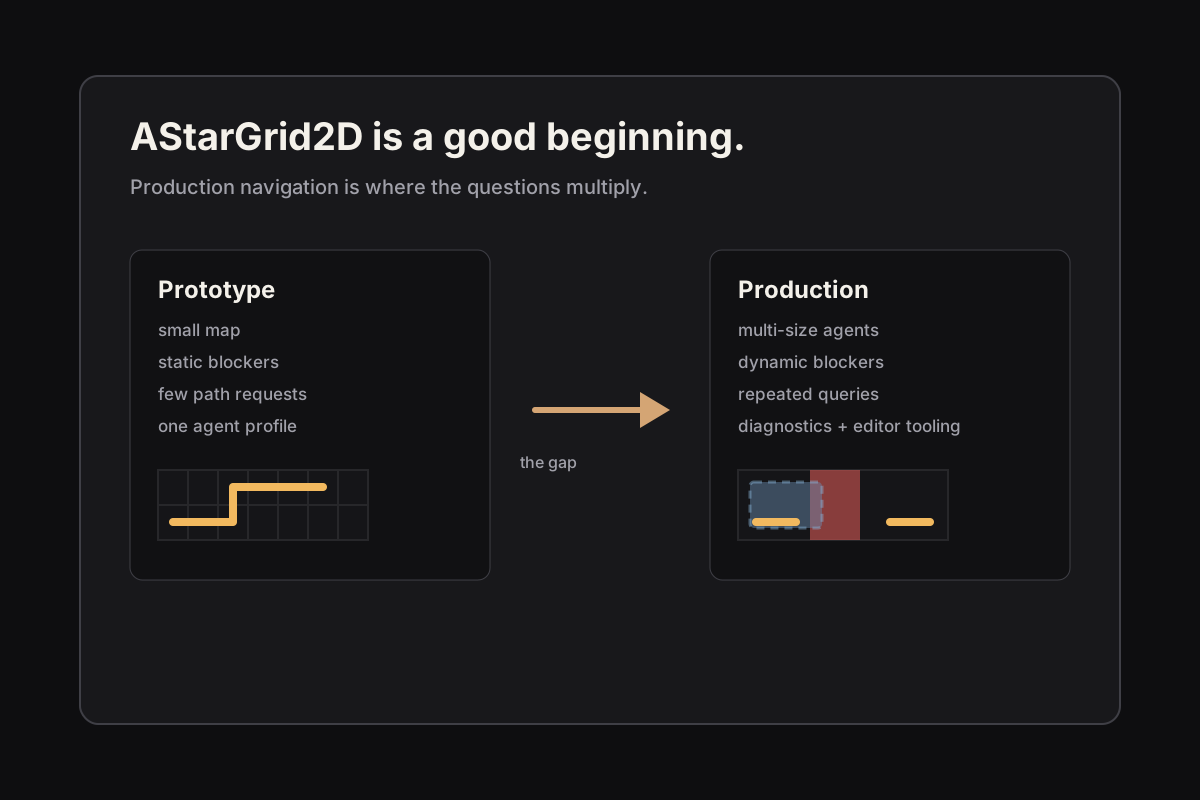
The direct answer: when to look for an alternative
AStarGrid2D is the right default for small tile grids, turn-based maps, roguelikes, puzzle games, and prototypes where cells, solids, weights, and a few path requests are enough.
Look for an AStarGrid2D alternative when the surrounding system becomes larger than the query: multi-size agents need clearance data, dynamic blockers need local invalidation, crowds need scheduled or shared movement fields, and production teams need diagnostics that explain empty paths.
The alternative is not one thing. Sometimes the answer is still AStarGrid2D plus dirty-region updates. Sometimes it is NavigationServer2D for navmesh-shaped worlds. Sometimes it is a custom grid, flow field, clearance map, or product-level navigation layer. This page owns that decision boundary.
If you need the official AStarGrid2D documentation
For API signatures and property defaults, use the official Godot AStarGrid2D class reference. That is the source of truth for region, cell_size, update(), diagonal_mode, jumping_enabled, get_id_path(), get_point_path(), and the rest of the Godot 4 AStarGrid2D API.
This page is not a replacement for the official docs. It answers the next question developers usually have after reading them: when is AStarGrid2D still the right built-in, and when have production concerns around the grid outgrown the class? If you want the method-by-method companion, use the AStarGrid2D complete reference. If you want the decision boundary - dynamic blockers, multi-size clearance, repeated queries, flow fields, diagnostics, and alternatives - keep reading here.
The useful part of AStarGrid2D
Godot's built-in grid pathfinding is not bad technology. It solves an important category of problems well: turn-based prototypes, small tactical maps, puzzle games, lightweight roguelikes, low-agent-count simulations, educational projects, and early gameplay validation.
The API is understandable. Setup cost is low. Debugging remains manageable while the project is still conceptually small. That matters more than algorithm purity. Many projects should continue using it indefinitely.
If you're still inside that zone, the AStarGrid2D complete reference is the right companion: setup order, update(), solids, weights, diagonal modes, jumping, and partial paths.
The issue is not that AStarGrid2D exists. The issue is assuming that a prototype-scale navigation model automatically survives production scale. Usually it does not. The failure mode is rarely dramatic. It is usually a slow accumulation of local fixes, editor scripts, special cases, and profiler captures with increasingly accusatory timing bars.
Where the strain starts to appear
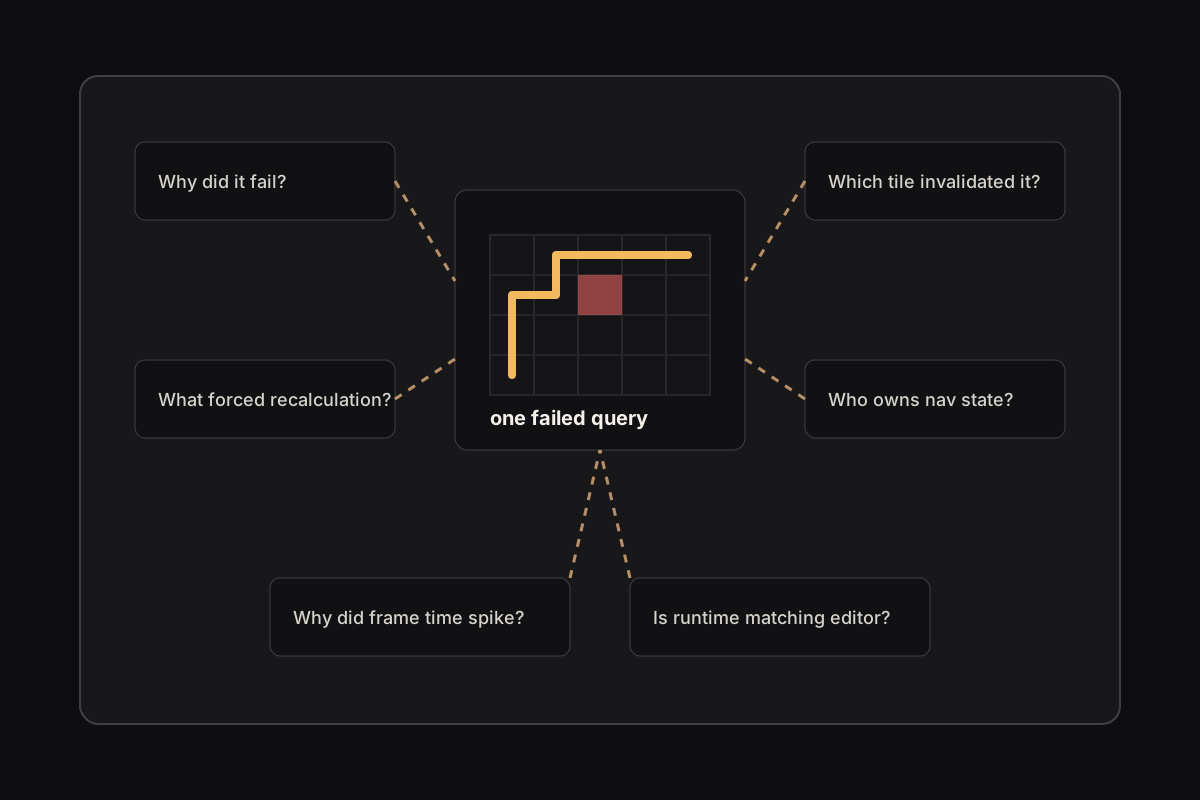
The first warning sign is rarely the pathfinding algorithm itself. It is workflow friction.
Questions begin appearing that the engine layer cannot answer clearly. Why did this unit fail to path? Which tile invalidated the route? Which obstacle forced the expensive recalculation? Why does this corridor work for 1x1 agents but fail for 3x3 units? Why did frame time spike after adding dynamic blockers? Which system owns the navigation state now?
The profiler asks these questions impolitely enough already. The tooling should not make them harder.
This is usually the moment when teams start building editor overlays, debug painters, custom clearance logic, cache systems, or partial-grid rebuild pipelines around the default navigation layer. Eventually the surrounding scaffolding becomes larger than the original pathfinding implementation. That is the point where the project is no longer using a pathfinding API. It is building a navigation product, just privately and without the benefit of admitting it.
Multi-size agents change the problem entirely
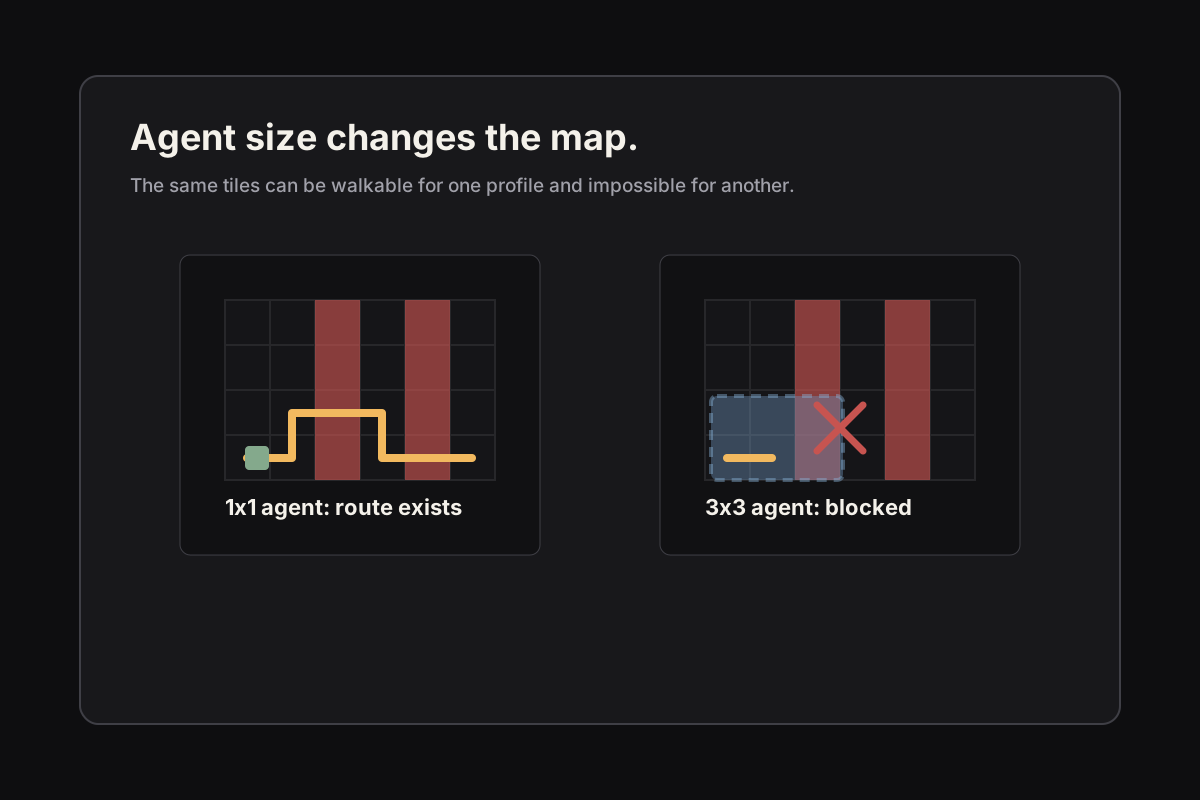
Most tactical and RTS-style projects eventually discover the same unpleasant detail: a path that exists for a small unit may not exist for a larger one.
Suddenly navigation is no longer binary walkable or non-walkable state. It becomes spatial clearance analysis. The system has to reason about footprint validation, corridor width, dynamic occupancy, terrain propagation, and whether a unit can stand on a tile without borrowing geometry from neighboring walls.
This is where a simple grid starts needing derived data. Clearance maps are the usual answer: each cell stores how much empty space exists around it for an agent profile. A 1x1 unit can pass through a corridor that a 3x3 unit cannot. The map may be the same, but the navigable space is not.
The complexity increase is not linear. Once multiple sizes, movement profiles, and dynamic occupancy enter the room, pathfinding stops being find route from A to B and becomes a continuously maintained spatial reasoning layer.
Dynamic obstacles are where rebuild costs become visible
Static worlds are forgiving. Dynamic worlds are accountants.
Doors open. Units block tiles. Physics objects move unexpectedly. Tactical effects temporarily invalidate terrain. AI systems generate overlapping requests. The naive response is often to rebuild the grid again.
This works until rebuild frequency collides with frame budget. Then navigation spikes begin appearing inside otherwise stable gameplay loops. A surprising amount of AI performance work is actually navigation invalidation work wearing a different shirt.
The production question is not only whether the pathfinder is fast. It is whether map changes are localized, whether cached data has clear ownership, whether repeated requests are scheduled sanely, and whether the editor can show what changed without asking someone to print arrays at midnight.
Production navigation is mostly diagnostics
The longer a project survives, the less valuable raw pathfinding speed becomes in isolation. Visibility matters more.
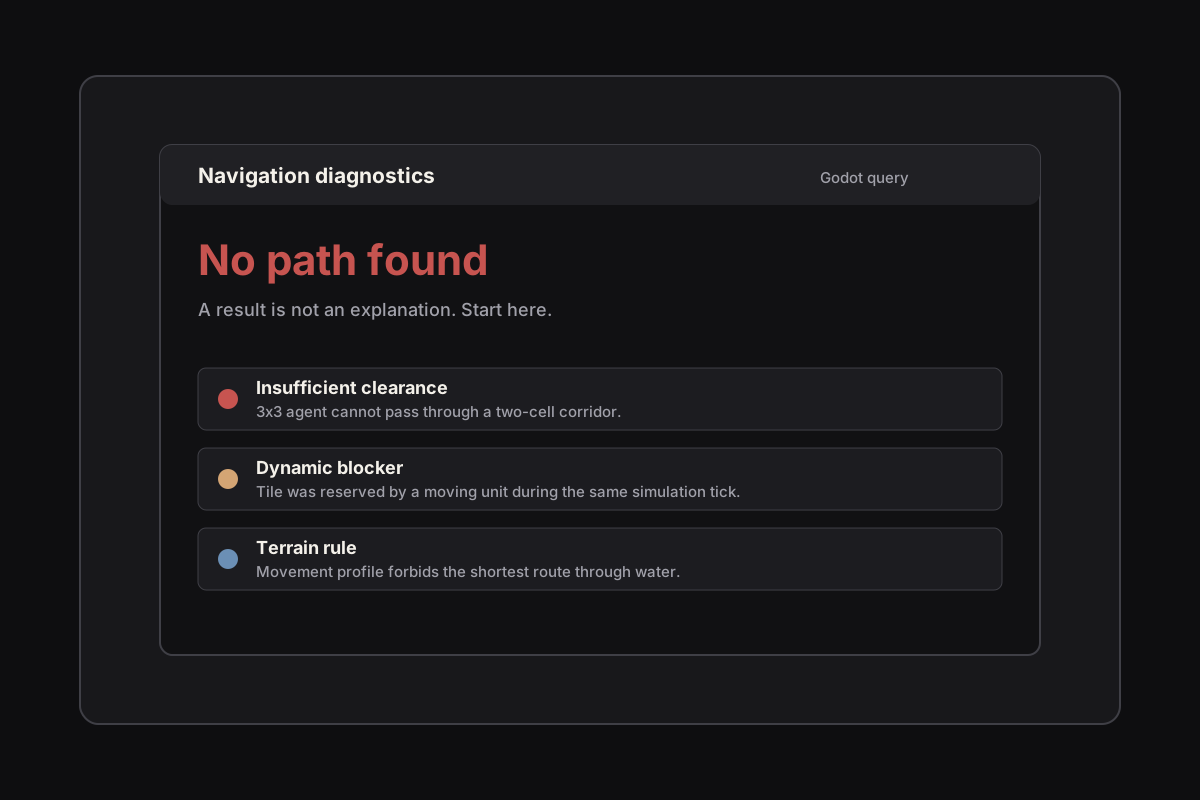
Teams need to understand why a path failed, why a route changed, what invalidated cached data, which systems currently influence movement state, and whether the editor representation matches runtime behavior.
Without diagnostics, navigation debugging becomes archaeological work performed under deadline pressure. People begin explaining behavior from memory. Memory is not a debugger. It is a charming liar with good intentions.
A useful production navigation layer should be able to point at the problem: this cell is blocked by a dynamic obstacle, this agent lacks clearance, this movement profile forbids the terrain, this target is reachable only after a cost increase, this cached region was invalidated by this event. That kind of explanation saves more time than shaving microseconds off a query nobody understands.
The gap between prototype and production
Godot provides foundational navigation systems. What many projects eventually need is the layer above them: editor-first diagnostics, tactical workflow tooling, multi-agent coordination, dynamic update management, movement-range visualization, flow fields, influence maps, clearance-aware navigation, and repeatable debugging workflows.
That gap is where production navigation systems begin to emerge.
That is also the problem space PathForge is being built around. Not because AStarGrid2D is wrong, but because many projects eventually outgrow the assumptions that made it convenient in the first place.
The honest rule is simple: use the built-in tool while it keeps the project legible. When the surrounding scaffolding becomes the real navigation system, it is time to treat navigation as infrastructure.
Frequently asked questions
What is the best AStarGrid2D alternative in Godot?
There is no single replacement. Use NavigationServer2D for navmesh-shaped worlds, AStar2D for irregular graphs, dirty-region grid updates for dynamic tile maps, flow fields for crowds with shared goals, and clearance maps for multi-size agents.
What are AStarGrid2D's main limitations?
The main limitations are not the A* class alone. They are repeated same-frame path queries, multi-size agent clearance, dynamic blocker invalidation, weak diagnostics for why a route failed, and the tooling needed to keep grid state visible.
Is NavigationServer2D better than AStarGrid2D?
NavigationServer2D is better for continuous navmesh-shaped spaces. AStarGrid2D is usually better for tile games with whole-cell blockers, terrain weights, movement ranges, and tactical rules.